Stop wasting dev cycles tuning MongoDB.
Contact sales
Fair warning: Don't be surprised at how fast you can ship with Tinybird. We'll show you how.
Here's a simple question:
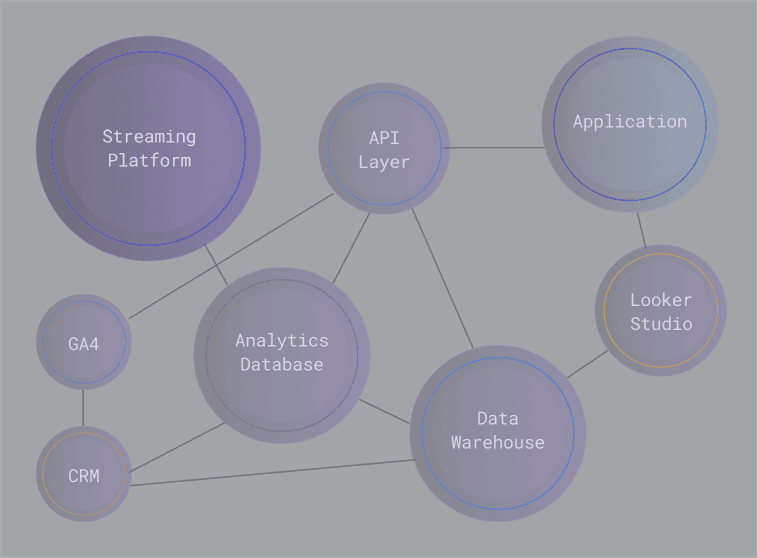
Without Tinybird,
you have to:
- Waste precious dev cycles tuning MongoDB
- Build complex and expensive ETLs
- Field user complaints about timeouts, missing data, and slow dashboards
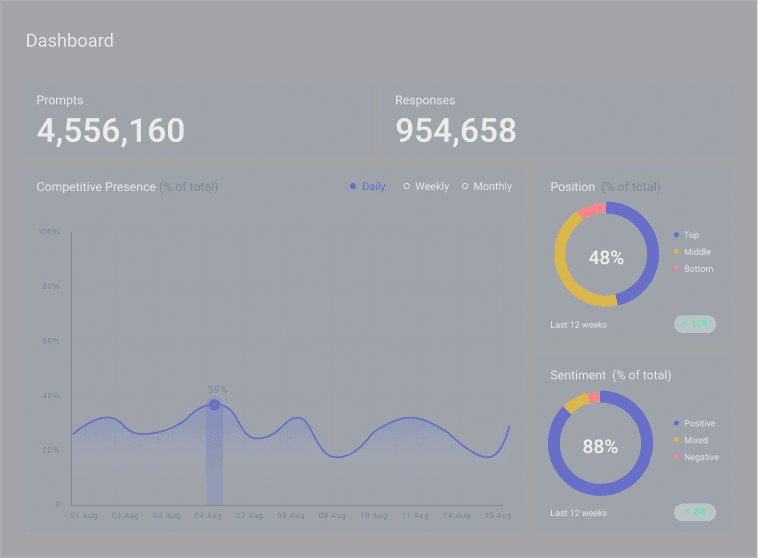
With Tinybird,
you get to:
- Get sub-second queries at billion-row scale
- Ship without learning an esoteric new database
- Use a database that *just works* for analytics—no fine tuning needed
Forget about your database and just ship
Build more
Outpace your competitors by shipping. Focus less on infra and more on what matters: Saying "yes" to your users.
Ship faster
Tinybird manages all of the data infrastructure so you can focus on feature work. Most devs ship their first MVP in a day.
Work linearly
Small teams trust Tinybird so they can build insanely fast data features without learning complex new tech.
Based on ClickHouse
Get the full power of the world's fastest OLAP database—without the hassle of actually managing it in production.
Less infra
Tinybird handles ingestion, load balancing, cluster scaling, HA, upgrades, and backups. Get more out of your database with less effort.
Lower cost
Tinybird is more cost efficient than MongoDB for analytics. Just $25/month gets you trillion-row storage and compute to serve 10k+ queries/day.
Less complex
Avoid tool sprawl and heavy infra. Tinybird hosts your entire analytics pipeline, from ingestion to API, with comfy abstractions to help you ship.
Easy migration
Stream events directly from your app with HTTP or set up serverless sync jobs between your MongoDB and Tinybird.
Great support
Need help from an analytics expert? Our support team is a bunch of data engineers with decades of OLAP experience.
Start for free.
Scale effortlessly.
$49/month
Shared infrastructure
- 0.5 vCPUs
- 1 thread/request
- 25GB included storage
- Vertical scaling
- 2 replicas included
- Standard support
Custom
Shared infrastructure
- Up to 32 vCPUs
- 4 to 16 threads/request
- 500GB included storage
- Vertical scaling
- 2 replicas included
- Standard or Premier support
- Yearly commitments discount
Custom
Dedicated infrastructure
- Unlimited vCPUs
- Custom threads/request
- Bottomless storage
- Vertical and horizontal scaling
- Cluster management
- Private regions available
- Standard or Premier support
- Yearly commitments discount
- Shared infrastructure
- 0.25 vCPUs
- 1 thread/request
- 1k requests per day
- 10GB included storage
- Community support


“I migrated DataFast's database from Mongo to Tinybird and... HOLY SH*T IT'S FAST! Tinybird reduced the cost by 75% and increased the performance by two orders of magnitude.”

Marc Louivon
Entrepreneur
Get back to feature work and ship analytics with Tinybird.
FAQs
Why is Tinybird faster than MongoDB for analytics?
MongoDB is a document-oriented database optimized for transactional workloads with flexible schemas. Tinybird uses ClickHouse, the world's fastest open source columnar database purpose-built for analytics (OLAP). For analytical queries scanning millions of documents, columnar storage reads only the columns you need and processes data in parallel, while MongoDB must traverse document structures one by one. This makes Tinybird 100-1000x faster on aggregate queries and time-series analytics, especially on large datasets.
Do I need to learn a new query language?
If you know SQL, you're already there. While MongoDB uses MQL (MongoDB Query Language), Tinybird uses standard SQL with ClickHouse. You'll use familiar syntax for SELECT, JOIN, GROUP BY, and window functions. If you're already comfortable with SQL from other contexts, you can start building immediately. If you're coming from MongoDB's aggregation pipelines, SQL will feel more straightforward for analytics.
How is Tinybird different from self-hosted ClickHouse?
Tinybird provides managed ClickHouse with zero infrastructure overhead. We handle cluster management, sharding, replication, and upgrades. Beyond that, we add a hosted API layer that turns your SQL queries into REST APIs instantly, managed ingestion with streaming via HTTP, and a local-first development environment. You get all the power of ClickHouse without the operational complexity.
Can I keep using MongoDB for transactions and use Tinybird for analytics?
Absolutely. This is a common pattern. Keep MongoDB as your transactional database, then stream changes to Tinybird via CDC (Change Data Capture) or periodic syncs. Or, just start sending time-series events directly to Tinybird using our lightweight Events API. Tinybird handles real-time ingestion and serves lightning-fast analytics queries, while MongoDB handles your OLTP workload. Best of both worlds.
How do I get data from MongoDB into Tinybird?
Several options: (1) Use MongoDB Change Streams with CDC tools to stream changes in real-time, (2) Application-level dual writes to both systems, or (3) Use our Events API to stream time-series data directly from your application. Most customers start with option 1, but quickly move to option 3 (The Events API is amazing).
Is Tinybird more expensive than MongoDB?
If your use case is analytics on time series data, Tinybird will almost certainly be cheaper. Tinybird offers a generous free tier (up to 1,000 API requests and 10GB processed per day). Paid plans start at $25/month with scaling based on compute needs. For most teams, offloading analytics from MongoDB to Tinybird significantly reduces costs by avoiding expensive MongoDB Atlas compute scaling and read replicas while delivering 100x faster queries. Not to mention all the time you're going to save not optimizing aggregation pipelines and managing indexes.